Pluto: Planet or Not? The Cosmic Controversy

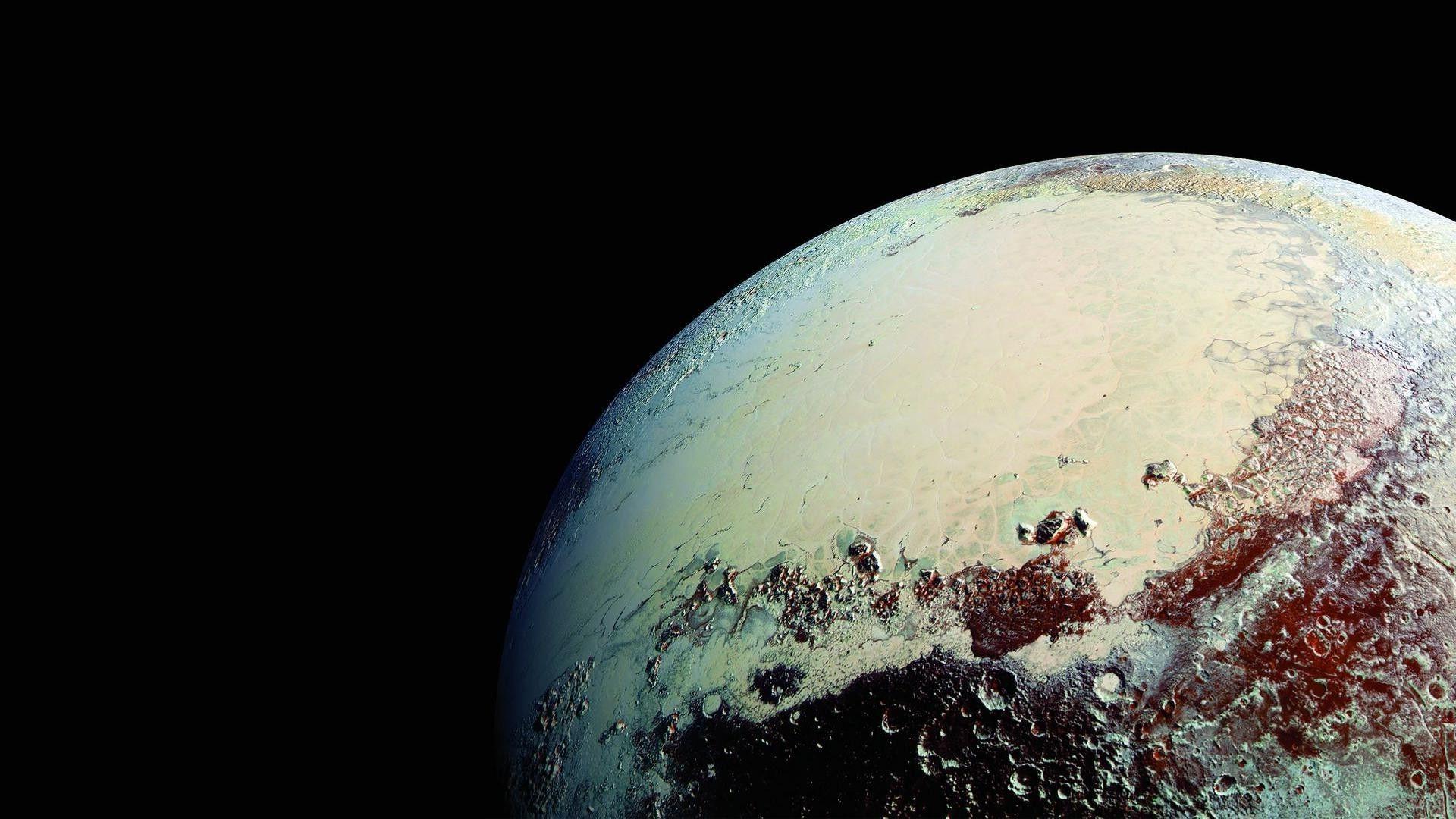
For decades, schoolchildren learned the mnemonic "My Very Educated Mother Just Served Us Nine Pizzas," with the last 'P' proudly standing for Pluto, the ninth planet. Discovered by Clyde Tombaugh in 1930, Pluto held its planetary title for 76 years. It was a distant, icy world, an outlier in our solar system, but undeniably a planet. Then, in 2006, the scientific community delivered a decision that shook the public and redefined our cosmic neighborhood: Pluto was reclassified as a "dwarf planet." This controversial move wasn't a sudden whim but the culmination of new discoveries and a growing need for a clear, universal definition of "planet."
The Discovery and Early Years
Pluto's discovery was a triumph of astronomical prediction. Percival Lowell, an astronomer, had theorized the existence of a "Planet X" beyond Neptune due to observed perturbations in Uranus's orbit. While Pluto turned out to be too small to account for those perturbations, its discovery by Tombaugh at the Lowell Observatory was celebrated. For years, it remained an anomaly: much smaller than the other planets, with an eccentric orbit that sometimes brought it closer to the Sun than Neptune. Yet, it was the ninth planet, and that was that.
The Kuiper Belt and New Discoveries
The turning point for Pluto came with advancements in telescopic technology and the subsequent discovery of the Kuiper Belt. Beginning in the early 1990s, astronomers began finding a vast region of icy bodies beyond Neptune – a "third zone" of the solar system, akin to an asteroid belt but much larger. As more and more large objects were found in the Kuiper Belt, the questions about Pluto's unique status intensified. Some of these objects, like Eris, discovered in 2005, were found to be very similar in size, and in some cases even larger, than Pluto.
This wave of discoveries forced astronomers to confront a critical question: If Eris, with its similar size and composition to Pluto, wasn't considered a planet, then why was Pluto? The solar system was suddenly populated with potentially dozens, if not hundreds, of "planets" if size alone was the only criterion. A clearer definition was desperately needed.
The IAU's Defining Moment
In August 2006, the International Astronomical Union (IAU) convened in Prague and, after much debate, established a formal definition for a planet within our solar system. For a celestial body to be considered a planet, it must meet three criteria:
- It must orbit the Sun. (Pluto does this.)
- It must be massive enough to be nearly round by its own gravity. (Pluto does this; it's spherical.)
- It must have cleared the neighborhood around its orbit. (This is where Pluto falls short.)
"Clearing its neighborhood" means that a planet has become gravitationally dominant in its orbital path, either by absorbing or ejecting most other objects in its vicinity. Pluto, residing within the crowded Kuiper Belt and surrounded by many other similarly sized objects, has not cleared its orbital path. Instead, it shares its orbital neighborhood with a multitude of other bodies.
Pluto: A Dwarf Planet with a Big Legacy
Based on the IAU's new definition, Pluto, along with Eris and other large Kuiper Belt objects like Makemake and Haumea, was reclassified as a "dwarf planet." This didn't mean Pluto disappeared or changed; it simply meant our understanding and classification system evolved.
While the decision was met with public outcry and sentimental attachment to the "ninth planet," it was a necessary step for scientific consistency. It highlighted that science is not static; it is a dynamic process of observation, discovery, and refinement. Pluto remains a fascinating world, providing valuable insights into the outer reaches of our solar system, and continues to be a subject of study, recently highlighted by the New Horizons mission flyby. The debate reminds us that even our most fundamental cosmic definitions can change as our knowledge expands.