Cosmic Ghosts: The Past, Present, and Future of the Pillars of Creation

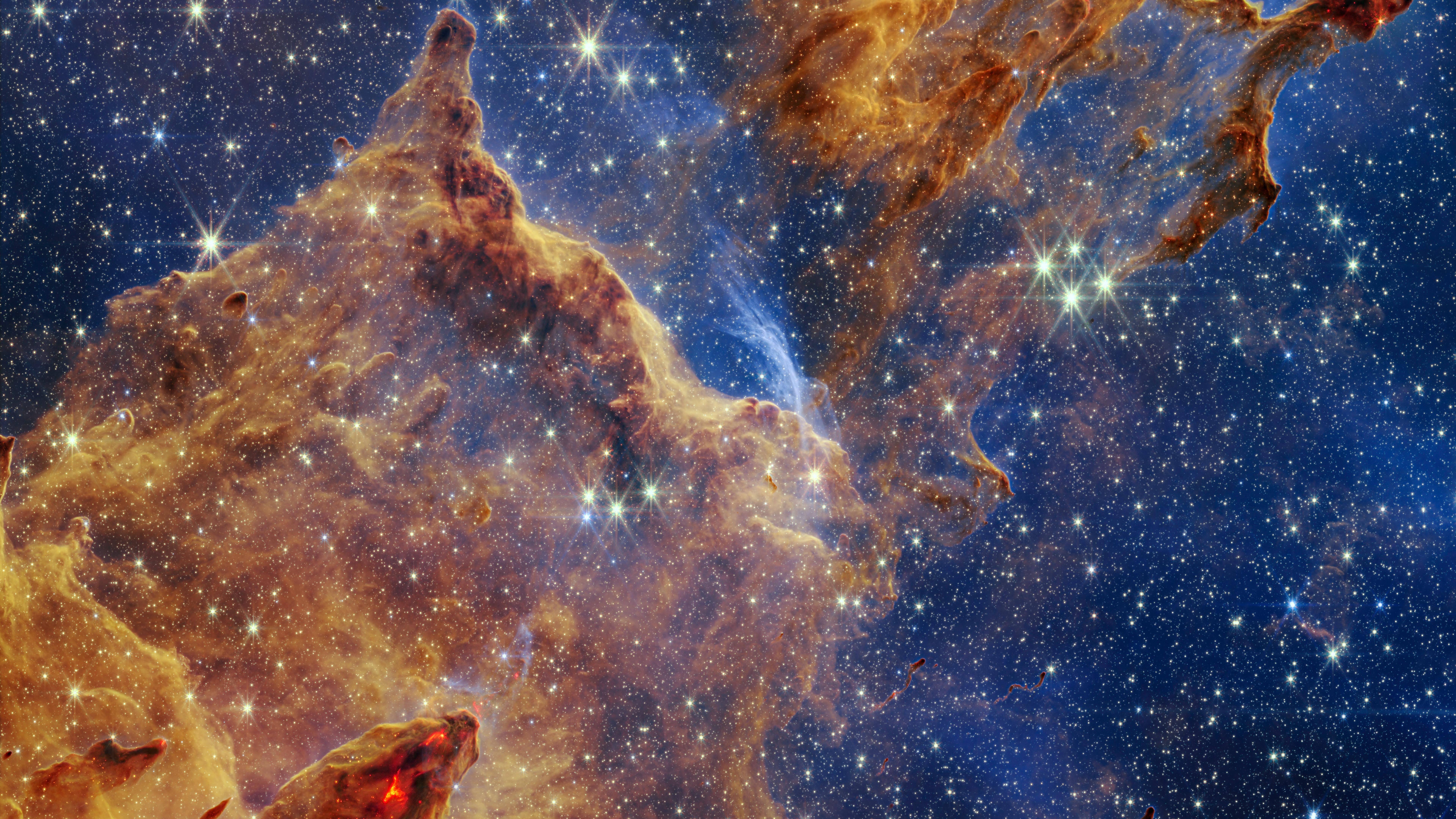
First unveiled to the world in a stunning 1995 image from the Hubble Space Telescope, the Pillars of Creation are one of the most breathtaking sights in our galaxy. Located roughly 7,000 light-years away in the Eagle Nebula, these towering structures are colossal columns of cool interstellar hydrogen gas and dust. The tallest pillar stretches an incredible four light-years from base to tip—a distance so vast that our entire solar system could fit inside it thousands of times over. They are not just beautiful, but are a vital window into the chaotic process of star birth.
The Pillars are a cosmic battleground between creation and destruction. Within their dense, dark columns, gravity is pulling clumps of gas and dust together, forming dense knots known as protostars. Given enough time, these will ignite to become brilliant new stars. However, a cluster of massive, young, intensely hot stars lies just off-screen from the famous image. These stars are unleashing a torrent of ultraviolet radiation that is blasting away at the pillars, sculpting their shapes and slowly evaporating them in a process called photoevaporation.
A New Look from Webb
In 2022, the James Webb Space Telescope cast its powerful infrared gaze upon the Pillars, piercing through the obscuring dust that Hubble could not. The resulting image revealed a new level of detail, showcasing hundreds of newly-formed, bright red stars still embedded within the gas. But this new view comes with a haunting possibility. Some astronomers theorize that a supernova blast wave may have toppled the Pillars over 6,000 years ago. Because of the vast distance, we won't see the light from this destructive event for another thousand years, meaning we may be looking at the majestic ghost of a structure that no longer exists.