A Mote of Dust: The Story of the Pale Blue Dot

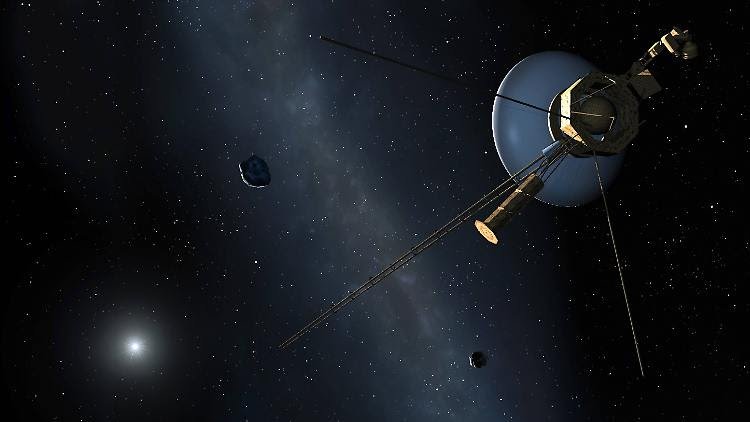
By 1990, the Voyager 1 spacecraft had completed its grand tour of the outer planets and was hurtling towards the edge of our solar system. Its primary mission was over. It was then that the famed astronomer and author Professor Carl Sagan made a special request: to turn Voyager's cameras around and take one last picture of Earth. There was resistance to the idea; it served no scientific purpose and risked damaging the camera by pointing it near the Sun. But Sagan's vision was not about science, it was about perspective. His persistence paid off, and the spacecraft pivoted for a final, long-distance farewell.
From a record distance of 6 billion kilometers (3.7 billion miles), Voyager 1 captured an image unlike any other. Earth appeared as a tiny, faint speck of light, less than a single pixel in size, suspended in a scattered ray of sunlight. There were no visible continents, no oceans, no clouds. There was only a "pale blue dot," almost lost in the vastness of space. The lack of detail is precisely what makes the photograph so powerful. It is not a portrait of our planet's geography, but a stark illustration of our place in the cosmos.
The Dot's Enduring Legacy
The image's true significance was cemented by Sagan's profound reflections on it. "Look again at that dot," he urged. "That's here. That's home. That's us." On that tiny pixel, he explained, is everyone you love, everyone you know, every hero and coward, every king and peasant—the aggregate of all human history played out on a mote of dust suspended in a sunbeam. The Pale Blue Dot is a humbling lesson in perspective. It underscores our shared vulnerability and our profound responsibility to preserve and cherish the only home we've ever known, challenging our delusions of self-importance and reminding us of our shared humanity in the great cosmic arena.