Grains of Starlight: Counting the Stars in Our Milky Way

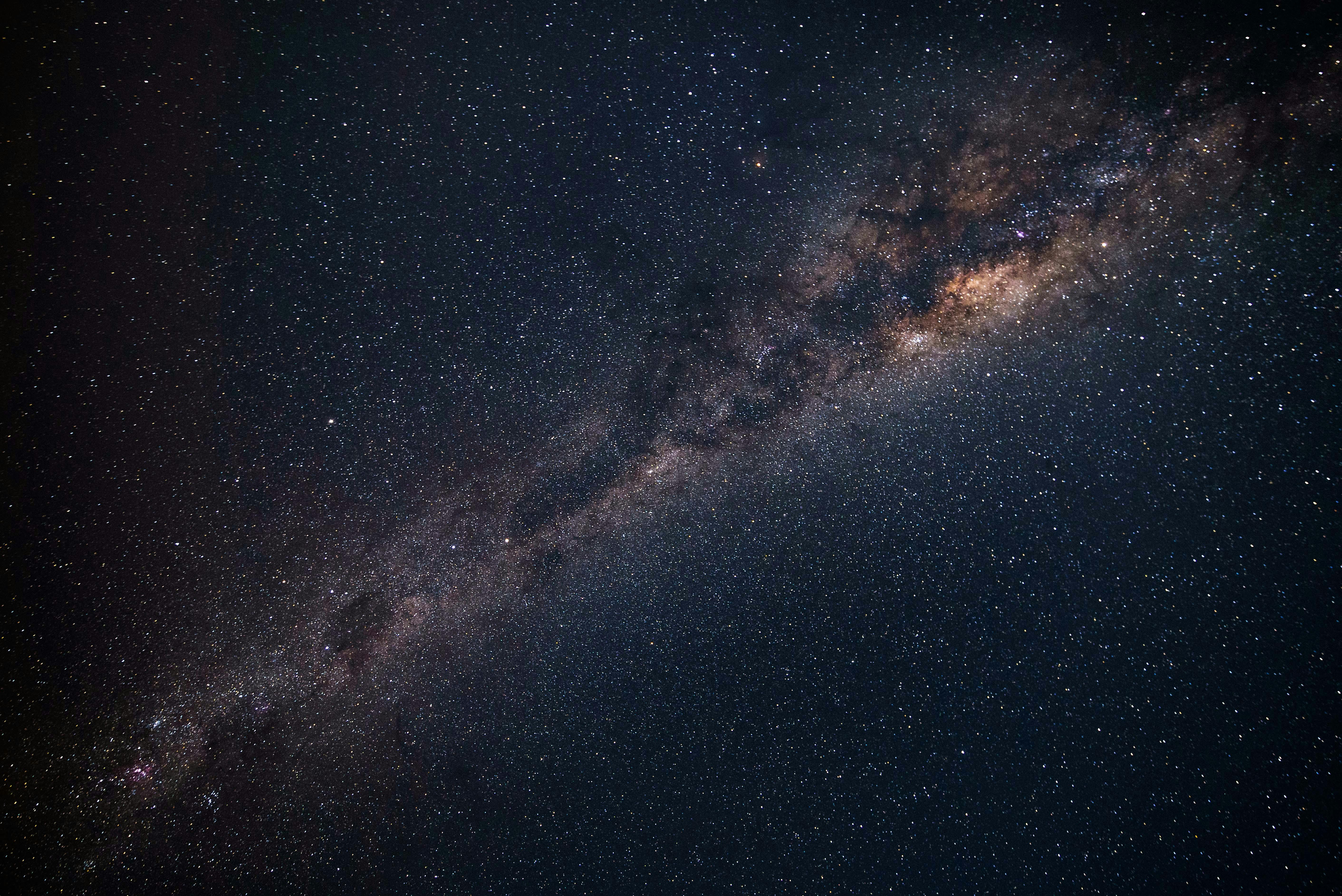
From a dark sky, the Milky Way appears as a faint, shimmering river of light—a band made of countless stars. But how many is "countless"? It's one of the most fundamental questions in astronomy, yet answering it is far more complex than simply pointing a telescope and tallying what we see. Our view is blocked by vast clouds of cosmic dust, and many stars are too small, dim, or distant to be detected directly from our vantage point within the galactic disk.
To arrive at a number, astronomers must become cosmic detectives. One primary method involves calculating the total mass of our galaxy. By observing the orbital speeds of stars and gas clouds, scientists can estimate the galaxy's gravitational pull and thus its mass. Once they have the total mass, they must subtract the estimated mass of dark matter, interstellar gas, and dust, leaving them with the combined mass of all the stars. This figure is then divided by the average mass of a star to produce a final estimate.
So, What's the Grand Total?
After decades of research and data from powerful observatories, the general scientific consensus places the number of stars in the Milky Way galaxy between 100 billion and 400 billion. The wide range accounts for uncertainties in the galaxy's total mass and the prevalence of different star types—our galaxy is mostly composed of small, dim red dwarfs that are difficult to detect. Missions like the European Space Agency's Gaia spacecraft are continuously refining this number by creating an incredibly precise 3D map of over a billion stars, helping us better understand the structure and stellar population of our cosmic home.