A New Eye on the Universe: Why the JWST is a Game-Changeray

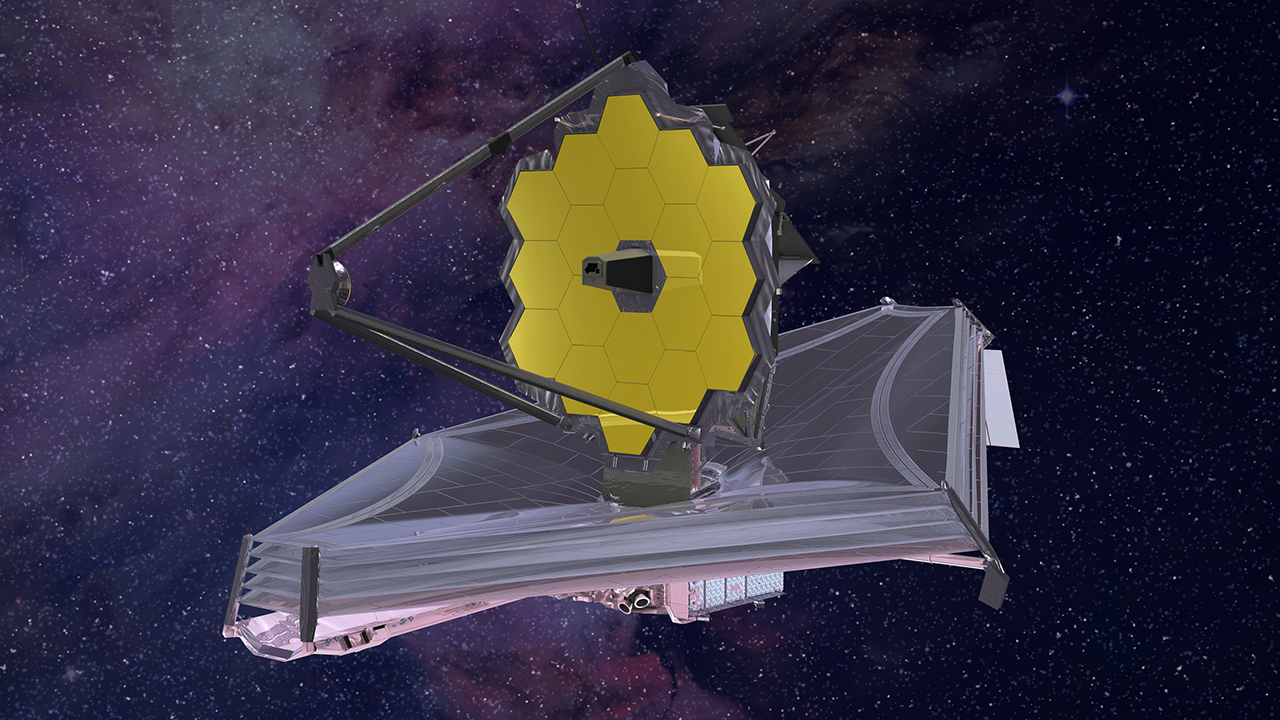
Launched on Christmas Day 2021, the James Webb Space Telescope (JWST) represents a new era in astronomy. With its iconic 6.5-meter golden mirror, it is the largest and most powerful space observatory ever built. While often called the successor to the Hubble Space Telescope, its mission is fundamentally different. JWST is a specialized time machine, engineered to see the universe in infrared light. This allows it to detect the faint, stretched-out light from the very first stars and galaxies that formed just a few hundred million years after the Big Bang.
The power of infrared vision is transformative. Firstly, it allows Webb to peer through the immense clouds of cosmic gas and dust that hide stellar nurseries from view in visible light. This gives astronomers an unprecedented look at the chaotic process of star and planet formation. Secondly, as the universe expands, the light from the most distant objects is stretched to longer, redder wavelengths—a phenomenon called redshift. By being sensitive to this infrared light, Webb can capture images of the universe's infancy, a period of cosmic history that was previously completely inaccessible to us.
Searching for Other Worlds
Perhaps the most exciting capability of the JWST is its ability to study exoplanets—planets orbiting other stars. When an exoplanet passes in front of its star, a tiny fraction of the starlight filters through the planet's atmosphere. Webb can analyze this light using a technique called spectroscopy to detect the chemical fingerprints of different molecules. This means we can determine what these distant atmospheres are made of, searching for gases like water, methane, and carbon dioxide. It is our first real tool capable of detecting potential signs of habitability on worlds light-years away, tackling one of humanity's oldest questions: Are we alone?