Fermi Paradox: Where are they?

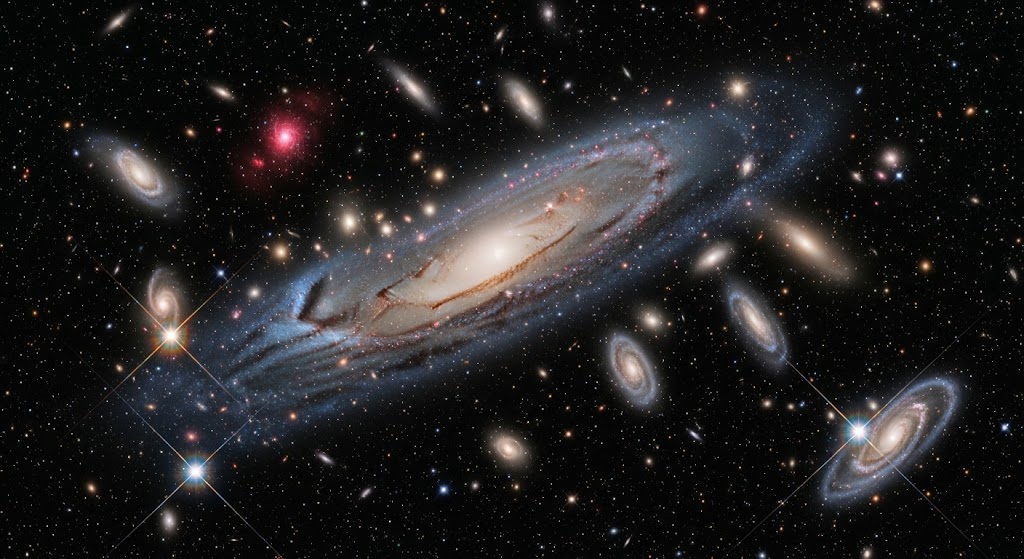
The Fermi Paradox is one of the most fascinating and unsettling questions in science:
"Where is everybody?" — Enrico Fermi, 1950
On the surface, it’s simple:
- The universe is enormous, with ~200 billion galaxies each holding billions of stars.
- Many of those stars have planets in the habitable zone.
- Life on Earth arose relatively quickly after the planet formed.
- Therefore, intelligent life should have had plenty of time to appear elsewhere.
So… why is the night sky so quiet?
Possible Explanations
1. We Are Early
Life might be rare, and we are among the first intelligent civilizations to emerge. The galaxy could be mostly empty for now.
2. The Great Filter
A "Great Filter" is a barrier that stops life from advancing to the point of galaxy-wide communication or travel.
Possible filters:
- Life is extremely rare to begin with.
- Complex life almost never evolves.
- Civilizations tend to self-destruct (war, environmental collapse, AI gone wrong).
3. They’re Hiding (Zoo Hypothesis)
Advanced civilizations might know about us, but intentionally avoid contact, letting us evolve naturally — like zookeepers observing animals.
4. We’re Looking Wrong
Perhaps we’re searching with the wrong tools or looking for the wrong signs. Life might use communication methods we don’t yet understand.
5. Space Is Hard
Even if civilizations survive long-term, interstellar distances are immense. The speed of light and vast travel times make contact impractical.
Why It Matters
The Fermi Paradox forces us to consider the future of humanity.
If the Great Filter is behind us (life is rare), we may be incredibly lucky.
If it’s ahead of us (most civilizations self-destruct), we need to tread carefully.
Either way, the silence of the cosmos is both humbling and eerie.