Into the Void: A Primer on Nature's Strangest Objects

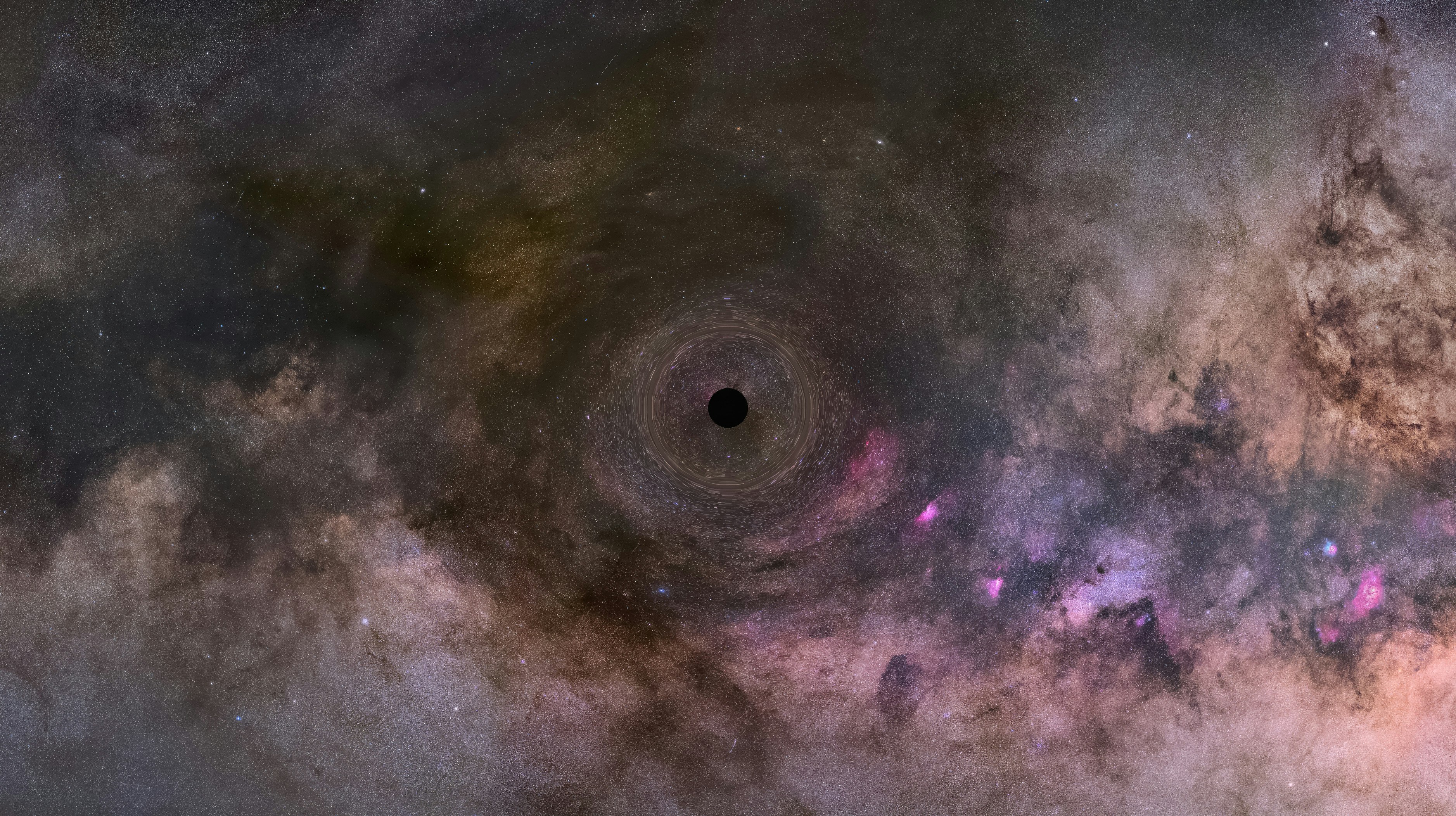
At the end of its life, when a truly massive star runs out of fuel, it collapses under its own immense weight. The result is one of the most mysterious and powerful objects in the universe: a black hole. It is a point in space where gravity is so strong that it creates a one-way street in the cosmos. Anything that gets too close is pulled in, and once it crosses a boundary known as the event horizon, it can never escape—not even light, the fastest thing in the universe. This isn't a physical surface, but rather the threshold where the escape velocity surpasses the speed of light itself.
The journey towards a black hole would be the ultimate trip into the bizarre. As you approach the event horizon, the intense gravity would warp spacetime, making the stars around you appear distorted. If you were to fall in feet-first, the gravitational pull on your feet would be so much stronger than on your head that you would be stretched into a long, thin strand of atoms—a gruesome process astronomers playfully call "spaghettification." At the very center lies the singularity, a point of near-infinite density where matter is crushed to an impossibly small size and our current laws of physics simply break down.
Seeing the Unseeable
So how do we study something that emits no light? Astronomers hunt for black holes by observing their effects on their surroundings. They can track the paths of stars that appear to be orbiting an invisible partner, or they can detect the intense X-rays blasted out by gas and dust that is superheated as it spirals into the black hole's maw. In a monumental achievement, the Event Horizon Telescope collaboration managed to capture the first-ever direct image of a black hole's shadow in 2019, providing visual proof of these cosmic monsters and opening a new chapter in our exploration of the void.